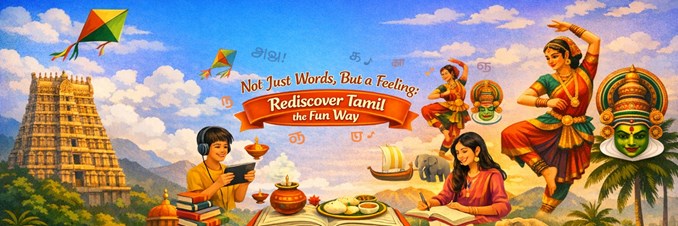
Not Just Words, But a Feeling: Rediscover Tamil the Fun Way
It’s not just a language — it’s a rhythm, a memory, a feeling that quietly lives within us. From the comforting sound of “Amma” to the playful slang we share with friends, Tamil has always been more than just words. Yet, somewhere between busy schedules and modern lifestyles, many of us have drifted away from truly experiencing it
Continue reading
Why Cultural Identity Starts with Language (and How to make it Stick)
It’s a scene played out in school cafeterias from New Jersey to Toronto. A child opens their lunchbox to find lemon rice or idlis, only to feel a moment of hesitation. Will their friends understand? Is it "too different"? This is the Lunchbox Dilemma—the point where a child’s home culture meets the outside world. While food is the most visible part of this transition, the true foundation of that child’s identity isn’t in the box; it’s in the language they use to describe it.
Continue reading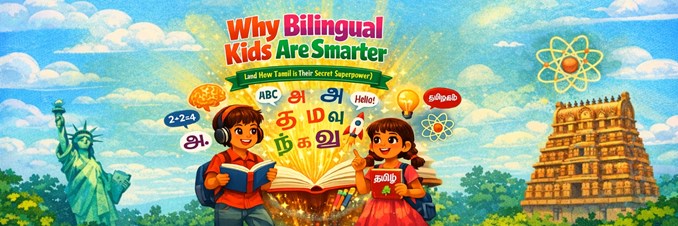
Why Bilingual Kids Are Smarter (and How Tamil is Their Secret Superpower)
In the fast-evolving world of 2026, parents are constantly looking for the next "edge" for their children. We sign them up for advanced coding, competitive robotics, and elite sports. But what if the most potent cognitive enhancer was already sitting right at your dinner table? Scientific research has caught up to what we’ve always felt: Bilingualism is a brain-builder. And for the diaspora child, Tamil isn’t just a heritage language—it’s a neurological secret weapon.
Continue reading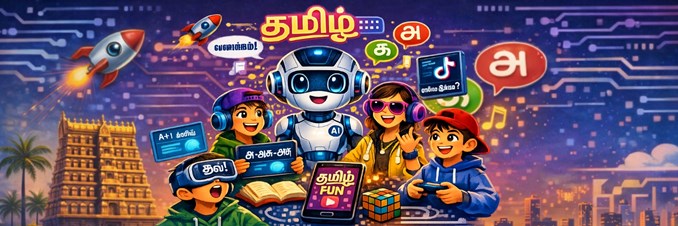
Playwithttamil’s AI Tutor is Making Tamil "Cool" for Gen Alpha
If you live in a Tamil-speaking household in the US or Canada, the "Language Battle" is a daily ritual. You say "Saapadu ready," they respond with "What’s for dinner?" But lately, a new voice is echoing through the hallways, and it’s not a strict tutor or a pleading grandparent. It’s Malar, the AI persona from Playwithtamil, and she’s doing the impossible: making the world’s oldest living language the "coolest" thing on the iPad.
Continue reading
Can You Be a "Global Citizen" Without Your Mother Tongue
In 2026, the term "Global Citizen" is everywhere. We want our children to be polyglots, tech-savvy, and culturally fluid. But there is a quiet question haunting many diaspora parents from Toronto to Tokyo: If my child speaks three languages but cannot whisper a prayer or tell a joke in Tamil, have they actually gained the world, or have they lost their center?
Continue reading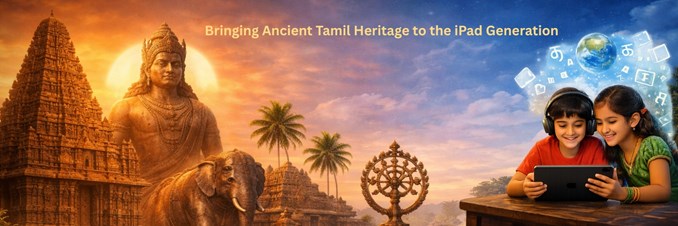
Bringing Ancient Tamil Heritage to the iPad Generation
For a Tamil child growing up in the suburbs of New Jersey or the snowy streets of Toronto, "heritage" often feels like something stored in a dusty attic. It’s the language spoken during long-distance WhatsApp calls to grandparents or the traditional clothes worn twice a year. But as we move further into 2026, a quiet revolution is happening. The 2,000-year-old Sangam verses are no longer just etched on palm leaves—they are vibrating through silicon chips and retina displays.
Continue reading