Goddess Siddhidatri – The Ninth Form of Navadurga
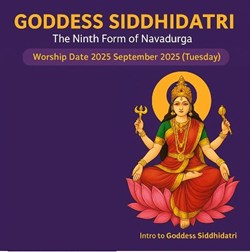
Goddess Siddhidatri – The Ninth Form of Navadurga
Worship Date in 2025:30th September 2025 (Tuesday)
Significance & Benefits
Worshipping Siddhidatri on Day 9 of Navratri brings:
- Fulfillment of desires and spiritual enlightenment
- Mastery over siddhis (spiritual powers) and inner wisdom
- Success in personal and professional pursuits
- Relief from Ketu-related astrological challenges
Ways to Invoke Her
- Chant:Om Devi Siddhidatryai Namah
- Offer: Sesame seeds, sweets, incense, and lotus flowers
- Rituals: Reciting Durga Saptashati, meditating on her divine form, and offering prayers with full devotion
- Wear: Purple or light blue attire to reflect mystic energy
Intro to Goddess Siddhidatri- the Ninth and final form of Goddess Durga
Goddess Siddhidatri is Goddess Durga's ninth and final form, which is worshipped on the Navami ninth day of September 30, 2025, Tuesday or the Mahanavami of Navaratri. Her name means "the giver of siddhis (supernatural powers or meditative abilities)," Maa Siddhidatri fulfills all the divine aspirations and completes the mundane. She is the primordial form of Goddess Parvati, and she bestows eight types of siddhis to her devotees, namely Anima, Mahima, Garima, Laghima, Prapti, Prakambya, Ishitva and Vashitva. She is also the consort of Lord Shiva in his Ardhanarishwara (half-man, half-woman) form. She is revered by all beings of the three worlds - devas (gods), asuras (demons), and manavas (humans).
The Origin of Goddess Siddhidatri
According to the legend, in the beginning of the universe, only a formless and infinite light pervaded everywhere. This light was none other than Goddess Adi-Parashakti, the supreme power of creation. She manifested herself as Siddhidatri Devi from the left half of Lord Shiva, who was worshipping her for creation. She then created the trinity of Brahma, Vishnu, and Shiva and assigned them their respective roles of creation, preservation, and destruction. She also gave them their consorts, Lakshmi, Saraswati, and Parvati, her forms. She then bestowed upon them eight types of siddhis to help them perform their duties.
The Iconography of Mata Siddhidatri
Siddhidatri Mata is depicted with four hands holding a chakra (discus), a shankh (conch shell), a gada (mace), and a lotus flower. She is seated on a fully bloomed lotus or a lion as her mount. She has a golden complexion and a radiant crown on her head. She has three eyes and a smiling face. She is adorned with various ornaments such as earrings, necklaces, bracelets, anklets, and a waistband. She wears a red saree with a yellow border and a green blouse.
The Worship of Goddess Siddhidatri
Siddhidatri Devi is worshipped on the ninth day, September 30, 2025, Tuesday, or the Mahanavami of Navaratri. Devotees offer her night-blooming jasmine flowers, coconut, sweets, incense, lamps, and fruits on this day. They also perform puja rituals such as abhishekam (bathing), alankaram (decoration), archanam (offering), aarti (waving of lamps) and pradakshinam (circumambulation). They chant her mantras, stotras, and prayers with devotion and reverence. They also observe fasts and perform charity deeds on this day.
The Legends of Maa Siddhidatri
Many legends associated with Goddess Siddhidatri demonstrate her power and grace. One legend says that Lord Shiva attained all the siddhis by worshipping her and became Ardhanarishwara, with her as his left half. Another legend says that Lord Rama invoked her before fighting Ravana and received her blessings for victory. Yet another legend says that Markandeya Rishi got the boon of immortality from her after performing severe penance.
Planet controlled by Goddess Siddhidatri
It is believed that Goddess Siddhidatri provides direction and energy to planet Ketu, also known as the dragon's tail or the descending lunar node. Ketu represents detachment, spirituality, enlightenment, liberation, occultism, mystery, and psychic abilities. It also influences karmic debts, past lives, hidden enemies, and diseases. By worshipping Goddess Siddhidatri, one can appease Ketu and get relief from its adverse effects.
The Significance of Goddess Siddhidatri
Mata Siddhidatri is Goddess Durga's ultimate form, representing the culmination of Navaratri celebrations. She signifies attaining perfection, fulfillment, and liberation from worldly bondage. She also symbolizes the union of Shiva and Shakti, which is the source of all creation. One can achieve all kinds of siddhis by worshipping her and becoming one with the supreme consciousness.
Book Pooja Services for Navratri 2025
Invoke Goddess Siddhidatri’s blessings with verified priests and astrologers via Sulekha Religious Services in the USA and Canada.
Book now and embrace divine fulfilment and wisdom.
Searching for Religious Services? Let’s make your search simple with professionals!
Take your Religious Services to the next level with Sulekha. Boost your online visibility, connect with more clients, and grow effortlessly!


Blogs Related to Religious Services
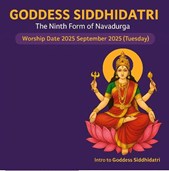
Goddess Siddhidatri – The Ninth Form of Navadurga
Goddess Siddhidatri – The Ninth Form of Navadurga Worship Date in 2025:30th September 2025 (Tuesday) Significance & Benefits Worshipping Siddhidatri on Day 9 of Navratri brings: Fulfillment of desires and spiritual enlightenment Mastery over
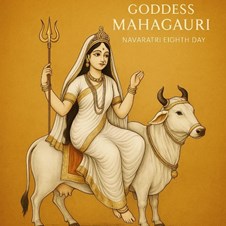
Goddess Mahagauri – The Eighth Form of Navadurga
Goddess Mahagauri – The Eighth Form of Navadurga Worship Date in 2025:29th September 2025 (Monday) Significance & Benefits Worshipping Mahagauri on Day 8 of Navratri brings: Purification of mind, body, and soul Relief from past karmic burdens
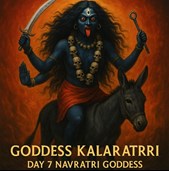
Goddess Kalaratri – The Seventh Form of Navadurga
Goddess Kalaratri – The Seventh Form of Navadurga Worship Date in 2025: 28th September 2025 (Sunday) Significance & Benefits Worshipping Kalaratri on Day 7 of Navratri brings: Protection from evil forces and negative energies Strength to face
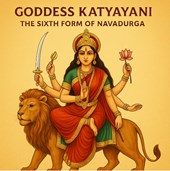
Goddess Katyayani – The Sixth Form of Navadurga
Goddess Katyayani – The Sixth Form of Navadurga Worship Date in 2025: 27th September 2025 (Saturday) Significance & Benefits Worshipping Katyayani on Day 6 of Navratri brings: Power to overcome obstacles and enemies Courage, confidence, and a
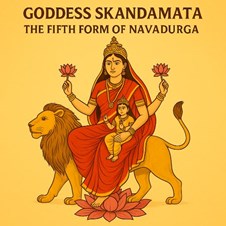
Goddess Skandamata – The Fifth Form of Navadurga
Goddess Skandamata – The Fifth Form of Navadurga Worship Date in 2025:26th September 2025 (Friday) Significance & Benefits Worshipping Skandamata on Day 5 of Navratri brings: Maternal blessings and protection for children Wisdom, compassion, a
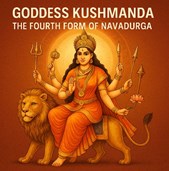
Goddess Kushmanda – The Fourth Form of Navadurga
Goddess Kushmanda – The Fourth Form of Navadurga Worship Date in 2025: 25th September 2025 (Thursday) Significance & Benefits Worshipping Kushmanda on Day 4 of Navratri brings: • Vitality, health, and creative energy • Prosperity and success in p